




If you’ve ever applied for a business loan, a credit card, or pretty much anything involving borrowed money, you’ve probably felt that tiny knot in your stomach when someone says, “We’ll just check your credit.”
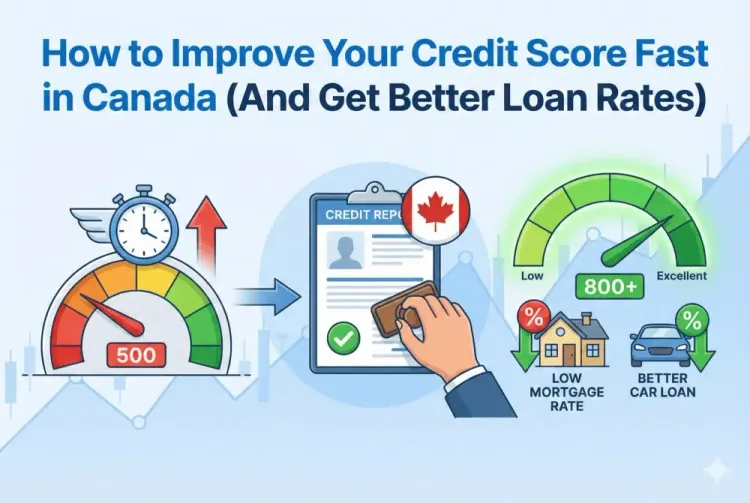
A credit score in Canada isn’t just a number — it’s a silent judge watching every financial move you make. Improve it, and life gets easier. Ignore it… and, well, life gets more “character-building.”
This guide breaks down what affects your score, how to boost it, and the mistakes to avoid in 2026. Friendly, practical, no shame included.
What Affects Credit Score?
Before fixing anything, it helps to know what’s actually broken. Canada’s two major credit bureaus — Equifax Canada and TransUnion — use similar scoring models. Most scores range from 300 to 900, with anything above 760 considered excellent.Here’s what goes into your credit score (and how much each part matters):
- Payment History (35%)
Lenders want to see that you can handle payments consistently — think of it like showing up to work on time. Not glamorous, but it keeps everyone happy.
- Credit Utilization (30%)
If you have a $5,000 limit and your balance is $4,800, lenders see you as financially stressed… even if you swear you’re “totally fine.”
The sweet spot: Keep usage below 30% of your limits.
- Length of Credit History (15%)
A ten-year-old card with a tiny balance is more helpful than a shiny new credit product you opened last week.
- Credit Mix (10%)
- New Credit (10%)
Multiple hard inquiries = temporary score drops.
Proven Ways to Improve It
Improving your credit score isn’t a mystery — it’s more like brushing your teeth. Small habits repeated consistently.Here are the most effective ways Canadians can boost their score in 2026:
- Pay Everything On Time (Yes, Everything)
If you’re forgetful (we’ve all been there), set:
- Auto-payments
- Calendar reminders
- Bank alerts
- Lower Your Credit Utilization
Strategies that help:
- Make two smaller payments per month instead of one
- Ask for a credit limit increase (without increasing spending)
- Spread balances across cards
- Keep Old Accounts Open
Closing your oldest credit card is like deleting proof of good behaviour.
If you don’t use it, buy a coffee with it once every few months to keep it active.
- Add a Credit-Builder Product
These products are designed for rebuilding, not judging.
- Diversify Your Credit Mix (Carefully)
- Limit New Applications
Instead:
- Pre-qualify with soft checks
- Space out credit applications over time
- Check Your Credit Report for Errors
Check your report at least once a year through:
- Equifax Canada
- TransUnion
- Incorrect balances
- Accounts that aren’t yours
- Wrong addresses
- Duplicate negative items
- Use Budgeting Tools to Control Spending
Quick budgeting ideas:
- 50/30/20 rule
- Zero-based budgeting
- Envelope method (if you love stationery)
- Banking apps with spending breakdowns
Mistakes to Avoid
Sometimes improving your credit score is less about what you do and more about what you shouldn’t do.Here are the common credit pitfalls Canadians fall into:
- Maxing Out Your Cards
People with high scores rarely exceed 30% — and often sit comfortably under 10%.
- Closing Cards Too Quickly
Unless you’re dealing with a high annual fee, leave your oldest cards open.
- Applying for Too Much Credit at Once
If you’re rate shopping for a mortgage or car loan, do it within the same week — they usually count as one inquiry.
- Ignoring High Balances and Letting Interest Build
If balances feel overwhelming, consider:
- Debt consolidation loans
- Balance transfer credit cards
- Speaking with a credit counsellor
- Only Paying Minimums
Paying more aggressively is key to long-term improvement.
- Not Monitoring Your Credit at All
Think of it like using a scale when you’re trying to get in shape. Avoiding it doesn’t make the problem go away.
Final Thoughts: Improving Your Credit Score Is a Marathon, Not a Sprint
No one fixes their credit score overnight — not even those financial “gurus” on YouTube who swear they did it in 10 days.Real, sustainable improvements come from steady habits:
- Pay on time
- Keep balances low
- Build credit history
- Avoid unnecessary applications
- Monitor your report
With smart habits in 2026, you’ll be well on your way to a stronger financial profile — and fewer sweaty-palmed moments when someone says, “Just checking your credit.”
And if you want to explore the best credit-building options without getting lost in the fine print, using a trusted comparison platform like Smarter Loans makes the whole process a lot easier.
 Written by:
The Smarter Loans Editorial Team produces in-depth, original content to help Canadians navigate borrowing, credit, and personal finance with confidence.