



On this page
The difference in one paragraph
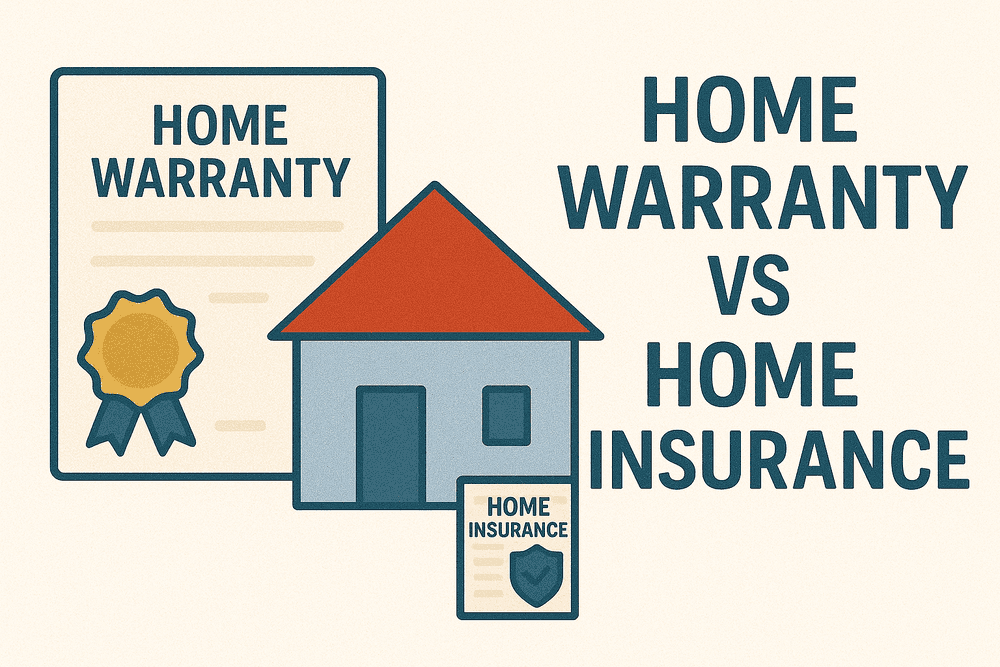
Home insurance pays when something happens to your house. A home warranty pays when something in your house stops working. Insurance is built around sudden, accidental events from outside: a fire, a storm, a burst pipe, a break-in. A warranty is built around ordinary failure from inside: the furnace that will not start, the dishwasher that floods, the water heater that gives out in its ninth winter. Insurance explicitly excludes wear and tear, which is exactly what a warranty is for.
What home insurance covers
A standard Canadian policy covers the building, your belongings, and your liability if someone is injured on your property. The trigger is a sudden, accidental peril: fire, lightning, wind, hail, theft, vandalism, and water escaping from plumbing. Most policies also pay living costs if the damage makes the home unliveable.
What it does not cover is as important. Wear and tear, mechanical breakdown, poor maintenance, and gradual damage are excluded from every standard policy. The Insurance Bureau of Canada puts it in one line: a home insurance policy is not a maintenance contract. Overland flooding and sewer backup are typically add-ons rather than included. And a claim costs you the deductible plus, often, a higher premium at renewal, so small claims are rarely worth filing.
If you have a mortgage, your lender requires insurance. That is not optional and it does not lapse quietly: lenders check.
What a home warranty covers
A home warranty is a service contract, not insurance. You pay an annual fee, and when a covered system or appliance fails, you pay a service call fee and the provider arranges the repair or replacement. Typical coverage is furnace and air conditioning, water heater, plumbing and electrical systems, and major appliances, with each item capped at a dollar limit set in the contract.
The caps and exclusions are where these contracts live or die. Pre-existing faults are excluded. Items that failed from poor maintenance are excluded. Per-item caps are often well below replacement cost on a major system, so a $3,000 cap on a furnace that costs $7,000 installed leaves you paying the difference. Read the caps before the marketing.
Side by side
| Home insurance | Home warranty | |
|---|---|---|
| Covers | Sudden damage from an external event | Systems and appliances failing from use |
| Triggered by | Fire, storm, water escape, theft | Breakdown |
| Excludes | Wear, breakdown, poor maintenance | Pre-existing faults, neglect, cosmetic issues |
| Required? | By your lender, if you have a mortgage | No, always optional |
| You pay | Deductible per claim | Annual fee plus a service call fee |
| Limits | Policy limits, usually high | Per-item caps, often low |
Does home insurance cover appliances?
Only when an insured event damages them. If a fire or a storm destroys your fridge, your policy covers it as contents. If the same fridge simply stops working after eight years, nothing in your insurance responds, because mechanical breakdown is excluded by design.
That distinction is where most of the confusion sits, and it is the single most common reason a homeowner calls their insurer and gets a no. An appliance that dies of old age is a warranty question or a personal expense. It is never an insurance claim.
What each one costs
Insurance premiums vary widely with the home, the location, the coverage and your claims history, and your deductible is what you pay per claim. Home warranty contracts are usually an annual fee plus a service call fee each time you use it. Both are quoted per property, so the only figures worth acting on are your own quotes.
The comparison that matters is not fee against premium. It is whether the warranty's annual fee plus its caps leaves you better off than putting the same money aside for repairs. For a newer home with newer systems, self-insuring usually wins. For an older home where several systems are near the end of their lives, the warranty can earn its fee in one call.
The gap neither one covers
There is a category of repair that falls between the two, and it is the one that hurts. A twenty-year-old furnace that fails is excluded from insurance as wear and often excluded from a warranty as a pre-existing condition or capped well below replacement. A roof at the end of its life is maintenance, not damage. Foundation movement, aged wiring, worn plumbing: all homeowner expenses, both policies silent.
These are not rare events. They are the predictable cost of owning a house long enough, and they arrive without notice.
Paying for a repair neither covers
When a repair lands outside both policies, the money comes from savings, a card, or borrowed funds. It is common enough to show up in application data. Across Smarter Loans personal loan applications from August 2025 to July 2026, borrowers citing home improvement as their purpose requested an average of $4,309, which is the scale of a furnace, a roof section or a plumbing replacement rather than a renovation.
If you are facing one of these, the order that costs least is usually: quote the work properly first, check whether the manufacturer's warranty on the specific unit still applies, ask the contractor about a payment plan, and only then borrow.
A $6,000 furnace replacement, two ways to pay
| Route | You get | When | Total cost |
| Personal loan | $6,000 | clears in 36 months | $1,486.65 interest ($207.96 a month for 36 months) |
| Credit card at minimum payments | $6,000 | about 28 years | $10,078.21 interest (20.99% at minimum payments, about 28 years to clear) |
The loan ends on a date you can see and the card does not, which matters most on a repair you did not choose and could not schedule. Same $6,000, and the card costs about seven times the interest because nothing forces it to end.
Illustrative only. A $6,000 repair financed over 36 months at 14.99% against the same amount carried on a card at 20.99% paid at minimums. Rates are examples, not offers.
To price your own repair, the personal loan calculator takes any amount, rate and term.
Do you need both?
Insurance is not a choice if you have a mortgage, and it would be reckless without one. The warranty is the real question, and it comes down to two things: the age of your systems and whether an unplanned $5,000 repair would be a problem. Older systems and tight cash flow argue for the warranty. Newer systems and a healthy emergency fund argue for putting the fee in savings instead, where it also covers the things a warranty excludes.
Whichever you choose, read the exclusions and the per-item caps first. Every complaint about home warranties comes from the same place: a homeowner who found out what was capped after the system failed rather than before.
If a repair needs funding, one application compares lenders on rate and total cost.
Frequently asked questions
Is a home warranty the same as homeowners insurance?
No, and they do not overlap. Insurance covers sudden damage from events like fire, storms and water escape. A warranty covers systems and appliances that fail from ordinary use, which insurance excludes by design. Having one does not cover you for what the other does.
Does home insurance cover appliances in Canada?
Only when an insured event damages them, such as a fire or a storm. An appliance that stops working from age or mechanical failure is not covered by any standard policy. That is warranty territory or an out-of-pocket expense.
Is a home warranty worth it in Canada?
It depends on the age of your systems and your tolerance for a surprise bill. On an older home where the furnace, water heater and appliances are all near the end of their lives, one covered failure can pay the annual fee. On a newer home, the same money set aside covers more, because savings have no exclusions and no caps.
What is not covered by either?
Wear and tear on the building itself, maintenance, gradual damage, and systems that are simply old. Roofs at the end of their life, aged wiring, worn plumbing and foundation movement are homeowner expenses under both. Those are the repairs people end up financing.
Sources
- Insurance Bureau of Canada, Types of Home Coverage, for the insured perils a standard policy responds to and the statement that a home insurance policy is not a maintenance contract. Verified 1 September 2026.
- Smarter Loans personal loan applications, August 2025 to July 2026, for the home improvement figure.
Related reading: using a personal loan for home renovations and emergency loans in Canada.

 Written by:
The Smarter Loans Editorial Team produces in-depth, original content to help Canadians navigate borrowing, credit, and personal finance with confidence.