One application. 1 lender from our 50+ network. Funded in 24 to 48 hours.
Apply Now One application routed to where you qualify.
Every Apply button starts the same single application. Your chosen lender is prioritized first.

Three things, and each changes how the loan should be shaped.
It is uncovered. Provincial plans do not pay for elective cosmetic procedures, and employer plans rarely do. The Government of Canada describes what the public system covers at canada.ca; cosmetic work sits outside it entirely, so the whole cost is yours.
It is quoted per procedure. A surgeon's quote names the procedure, the facility fee, the anaesthetist and the follow-up, and it is usually fixed. That makes a cosmetic loan unusually easy to size correctly, and unusually tempting to size wrongly by adding a procedure the quote did not include.
It has a recovery. Weeks of reduced income for a self-employed patient, and a period in which the last thing you want is a payment you cannot make. The term should end well inside the time you would be comfortable still paying for something that is done.
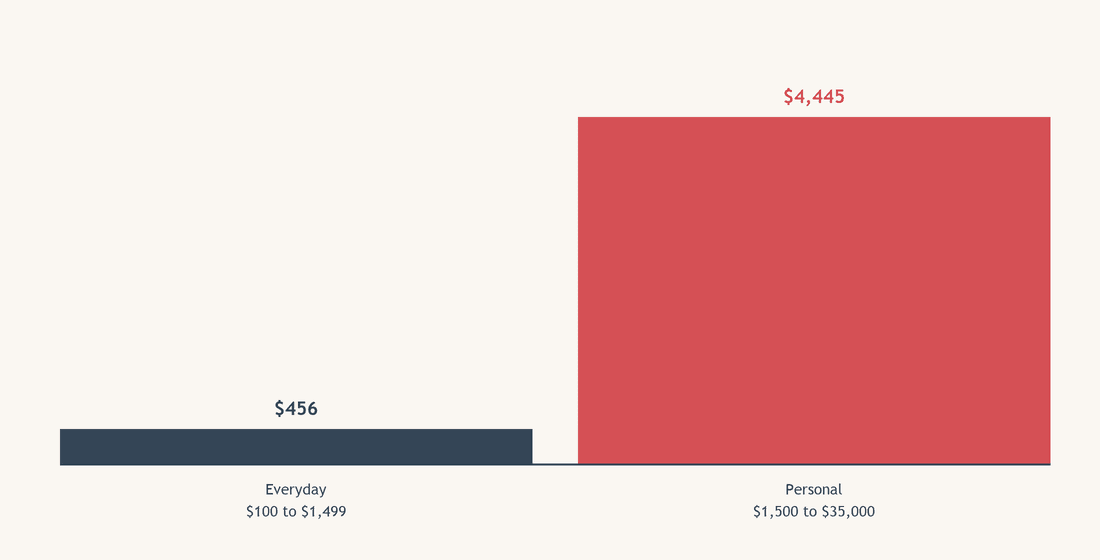
Applications stating cosmetic or plastic surgery as their purpose are too few on our platform to report on their own; fewer than a hundred in the twelve months to June 2026, which is below our reporting floor. The nearest population we can show is medical-expense borrowing at the personal scale, $1,500 to $35,000, which averaged $4,873 across 1,508 applications over the same twelve months, and $4,445 across the first half of 2026 alone.
| Scale | Share of applications | Average medical request |
|---|---|---|
| Everyday, $100 to $1,499 | 12.4% | $456 |
| Personal, $1,500 to $35,000 | 5.8% | $4,445 |
Source: Smarter Loans platform data, January 2026 to June 2026. Cosmetic surgery is included within medical expenses where an applicant chose that purpose; the twelve-month personal-scale average, $4,873, includes elective procedures.
That range, a few thousand dollars, is the scale of most non-surgical and minor surgical work: injectables over a year, a course of laser treatment, a minor revision. Larger procedures run well above it, a rhinoplasty or an abdominoplasty at a Canadian clinic sitting in the low five figures, and at those amounts the arithmetic below matters more than the quote does.
$8,000 over 24 months at 19.99% APR is about $407 a month and about $1,770 in interest. Over 36 months it is about $297 a month and about $2,700; over 12 months about $741 a month and about $890. The personal loan calculator prices any quote over any term.
Two things decide which row is right. The first is the month: the budget calculator shows what is left after each payment, and the recovery weeks should be run at reduced income. The second is the rule that holds on every page here, sharper on this one: the term should not outlast the thing bought by years. A procedure with a lifetime benefit can carry a longer term; a treatment that needs repeating in eighteen months should be paid off before it does.
Most cosmetic practices offer financing, either their own or through a specialist medical-finance company, and it is worth pricing before applying anywhere.
Where the clinic's plan is interest-free for a period with no fee and the quote can be cleared inside it, it beats every product on this page. Where it carries a rate, compare the total cost over the same term against the offers here rather than the monthly payment, because clinic plans often run longer terms to make the payment look small. And read the fee schedule: some medical-finance plans carry an administration fee at the outset or a penalty for early repayment, neither of which the lenders on this page charge on an instalment loan.
The honest combination for a large procedure is often the clinic's interest-free window for the part that can be cleared inside it and a short personal loan for the remainder, with the loan's term ending inside a year.
A personal loan from this page can fund a procedure anywhere; the lender does not restrict the use. What changes abroad is everything around the loan. Provincial plans do not cover complications from elective work done outside Canada, so a revision or an infection on return is a second uncovered cost, and a second loan. Travel insurance generally excludes elective procedures. The follow-up care a Canadian surgeon builds into the quote is not in a foreign one, and a Canadian surgeon asked to correct another's work charges as for a new procedure.
None of that is an argument against it; it is the reason the loan for a procedure abroad should carry a reserve the loan for a procedure at home does not, and the reason the term should be short enough that a second loan, if it comes, does not land on top of the first. Price the reserve into the amount, price the complication into the term, and treat the airfare and the recovery accommodation as part of the quote rather than extras. And get the foreign surgeon's aftercare plan in writing before booking, with a named Canadian provider who has agreed to see you on return; a surgeon who cannot supply that is asking you to carry a risk the quote does not price.
One listed lender on this page, a specialist in cosmetic and medical financing, offers personal loans from $1,000 to $50,000 unsecured, from 7.5% APR up to the 35% federal cap on instalment loans, on terms to 72 months. It asks for $2,500 a month in income and a fair credit score or better, so a poor score does not clear it; lenders that consider a poor score for a medical purpose are on the medical loans page. It publishes funding within 1 day.
A cosmetic purpose is the lender's specialty here, and it reads regular deposits first, existing commitments second, the score last. What a lender does notice is a self-employed applicant borrowing into a recovery period, because the deposits it is reading will dip; a file that says so, and shows the reserve to cover it, reads better than one that does not.
If the procedure is medically necessary rather than elective, the medical loans page covers where coverage ends and what the two scales of medical borrowing look like. All personal loan options are on the personal loans hub.
Source for all platform figures on this page: Smarter Loans personal loan applications, January 2026 to June 2026, and July 2025 to June 2026 where stated.
Reviewed by Rafael Rositsan, Co-Founder and CEO, Smarter Loans. Last reviewed 9 September 2026. Platform figures cover applications from 1 January to 30 June 2026, and the twelve months to 30 June 2026 where stated.
Yes. One listed lender on this page, a cosmetic and medical financing specialist, offers personal loans from $1,000 to $50,000 unsecured on a fair credit score or better, and reads deposits first. Cosmetic procedures are uncovered by provincial plans, so the whole cost is yours, which is why the loan should be sized to the itemised quote and no more.
$8,000 over 24 months at 19.99% APR is about $407 a month and about $1,770 in interest; over 36 months about $2,700. The term is the lever, and it should end well inside the benefit's life; a treatment that needs repeating in eighteen months should be paid off before it does.
Where the clinic's plan is interest-free for a period and the quote can be cleared inside it, yes. Where it carries a rate, compare total cost over the same term, not the monthly payment, and read the fee schedule for administration or early-repayment charges. A large procedure often splits: the interest-free window for what can be cleared inside it, a short loan for the rest.
Applications stating cosmetic surgery as the purpose are too few on our platform to report on their own. The nearest population, medical-expense borrowing at the personal scale, averaged $4,873 across 1,508 applications in the twelve months to June 2026, which is the scale of most non-surgical and minor surgical work.
Not from the lender on this page, which asks for a fair score or better. Lenders that consider a poor score for a medical purpose are listed on the medical loans page, where fourteen of the nineteen do. What any lender notices more on a cosmetic application is a self-employed borrower heading into a recovery period, since the deposits will dip; a file that shows the reserve to cover those weeks reads better than the score does.