One application. 19 lenders from our 50+ network. Funded in 24 to 48 hours.
Apply Now One application routed to where you qualify.
Every Apply button starts the same single application. Your chosen lender is prioritized first.

















Yes, and the reason is the same one that lets a freelancer or a first-time borrower get one: the lenders on this page read bank deposits, not a credit file. A newcomer with three months of Canadian income landing in a Canadian account has the thing they assess. What a newcomer lacks, a credit history, is something they are used to working without.
Nineteen lenders here offer personal loans from $15 on the smallest advances to $35,000 unsecured, at rates from 0% on the smallest advances up to the 35% federal cap. Income floors run from $1,000 to $2,500 a month from any regular source, most commonly $1,500. Fourteen of the nineteen will consider an applicant with no Canadian credit history; the other five ask for a fair score, which an empty file cannot yet show. One application reaches all nineteen and routes on your file.
The two are treated very differently, and it is worth knowing which you have.
Bad credit is a file with negative marks: missed payments, a collection, a default. No credit history is an empty file: you have not been in Canada long enough, or have not used credit here, for the bureaus to have anything to score. A lender that reads the score sees "no score" in both cases; a lender that reads the file sees two different things.
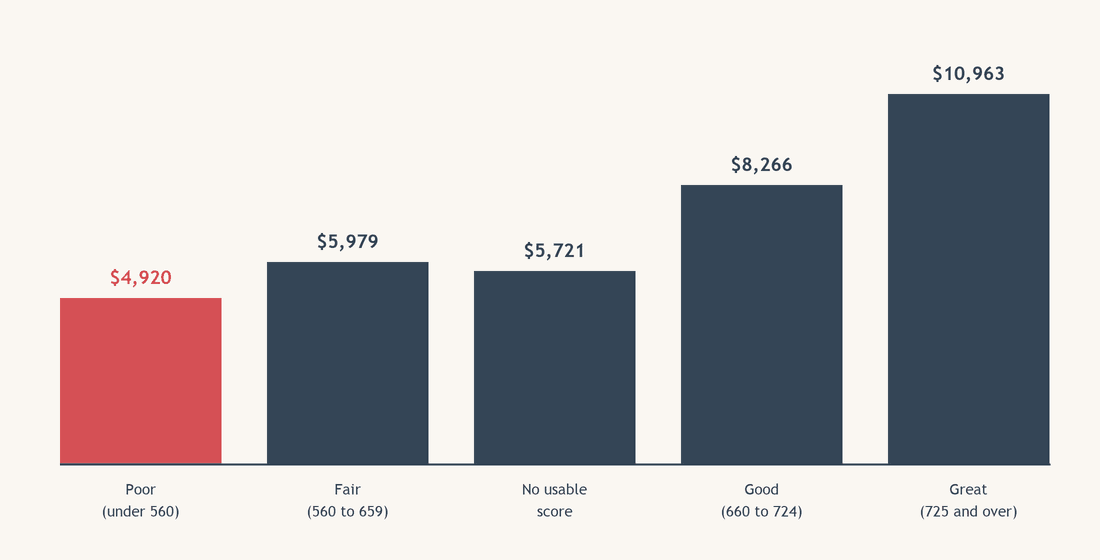
| Credit band | Share of personal applicants | Average request |
|---|---|---|
| Fair (560 to 659) | 46.3% | $5,979 |
| Poor (under 560) | 23.6% | $4,920 |
| No usable score | 22.1% | $5,721 |
| Good (660 to 724) | 6.7% | $8,266 |
| Great (725 and over) | 1.3% | $10,963 |
On Smarter Loans, from January 2026 to June 2026, 22.1% of personal loan applicants carried no usable score at all, more than one in five, and they asked for $5,721 on average, close to the overall average of $5,888. We do not record newcomer status as a separate field, so that group includes newcomers alongside young Canadians and anyone who has never used credit; it is the nearest segment we can show. The point is that an empty file is common, the lenders here see it every day, and it does not push the request down the way a poor score does.
Lenders on this page lend to permanent residents and to work permit holders. Two things matter about status, and neither is the passport.
The term of the permit. A lender will rarely write a loan whose term runs past the expiry of a work permit. A permit with fourteen months left supports a twelve-month loan and not a twenty-four-month one. Renew or extend before applying for a longer term.
The rule: take the months left on your permit, subtract three, and apply for no longer a term than that.
A Social Insurance Number and a Canadian bank account. Both are required by every lender here, and the account needs history: three months of deposits is the usual floor, six is better.
Study permit holders can apply where the permit allows work and the income shows in the account; a permit that does not allow work leaves no income to assess. Visitors and those awaiting a first permit are generally not eligible, because there is no Canadian income to read.
Income earned before you arrived does not count, however substantial. Lenders here assess Canadian deposits into a Canadian account, and the history starts on the day of the first one.
What a newcomer usually cannot supply is the one thing a bank leans on most, a Canadian credit score, and it is the one thing the lenders on this page have built their assessment to work without. The Financial Consumer Agency of Canada's guidance on opening a bank account covers the banking basics that come before any of this.
A first loan on an empty file prices near the top of a lender's range, because the lender has less to go on. That is not a penalty for being new; it is the same pricing anyone with three months of history gets.
On $3,000 over twelve months at 29.99% APR, the payment is about $292 a month and the total interest about $510. Repaid on time, that loan does two things: it clears the need, and it puts twelve months of positive payment history onto a file that had none. The second is often worth more than the first. The personal loan calculator prices any amount, rate and term.
Amounts on a first application tend to be modest, and lenders here prefer them that way. A $3,000 loan repaid cleanly is the fastest route to a $10,000 one at a better rate a year later; asking for $10,000 on three months of history usually gets a smaller offer or none. The budget calculator is worth running against the month before deciding the amount.
A loan from a lender that reports to the credit bureaus is one of the fastest ways to build a Canadian credit history from nothing, and most lenders on this page report. Twelve on-time payments create a file; a secured credit card paid in full each month alongside it creates a score. Within a year a newcomer who does both usually has a file a bank will read.
Two habits matter more than the loan. Keep every payment on the day it is due, since the first negative mark on a thin file costs more than the same mark on a thick one. And apply once rather than to several lenders, because each hard inquiry lands on a file with nothing to offset it. The FCAC's guide to credit reports and scores explains how to check what the bureaus hold on you, which for a newcomer is a short but important read; our guide to improving your credit score fast covers the rest.
All personal loan options are on the personal loans hub. If the empty file is the only obstacle, the credit building loans page lists products built for exactly that; if the file has negative marks rather than none, the bad credit loans page covers a different assessment.
Source for all platform figures on this page: Smarter Loans personal loan applications, January 2026 to June 2026.
Reviewed by Rafael Rositsan, Co-Founder and CEO, Smarter Loans. Last reviewed 7 September 2026. Platform figures cover applications from 1 January to 30 June 2026.
Yes, from lenders that read bank deposits rather than a credit file. Nineteen lenders on this page offer personal loans and fourteen of them will consider an applicant with no Canadian credit history. On our platform in the first half of 2026, 22.1% of personal applicants had no usable score and asked for $5,721 on average, close to the overall average. Three to six months of Canadian bank statements is the file.
Yes, with lenders on this page, provided the permit's expiry is later than the loan term you want and the income shows in a Canadian bank account. A permit with fourteen months left supports a twelve-month loan, not a twenty-four-month one. A Social Insurance Number and a Canadian account with deposit history are required by every lender here.
No. Lenders here assess Canadian deposits into a Canadian account, and the history starts with the first one. Savings brought with you help the file indirectly, by showing the account has a balance, but do not count as income. Regular Canadian employment or self-employment income does.
A first loan on an empty file prices near the top of a lender's range, the same as anyone with three months of history, and every lender on this page is subject to the 35% federal cap. On $3,000 over twelve months at 29.99% the payment is about $292 a month and the interest about $510. A second loan after twelve clean payments usually prices lower.
Yes, where the lender reports to the credit bureaus, and most lenders on this page do. Twelve on-time payments create a file; a secured credit card paid in full each month alongside it creates a score. The two habits that matter are paying on the due date every time and applying once rather than to several lenders.